How to Optimize SEO in 2026: SGE, EEAT & Real-World Playbook
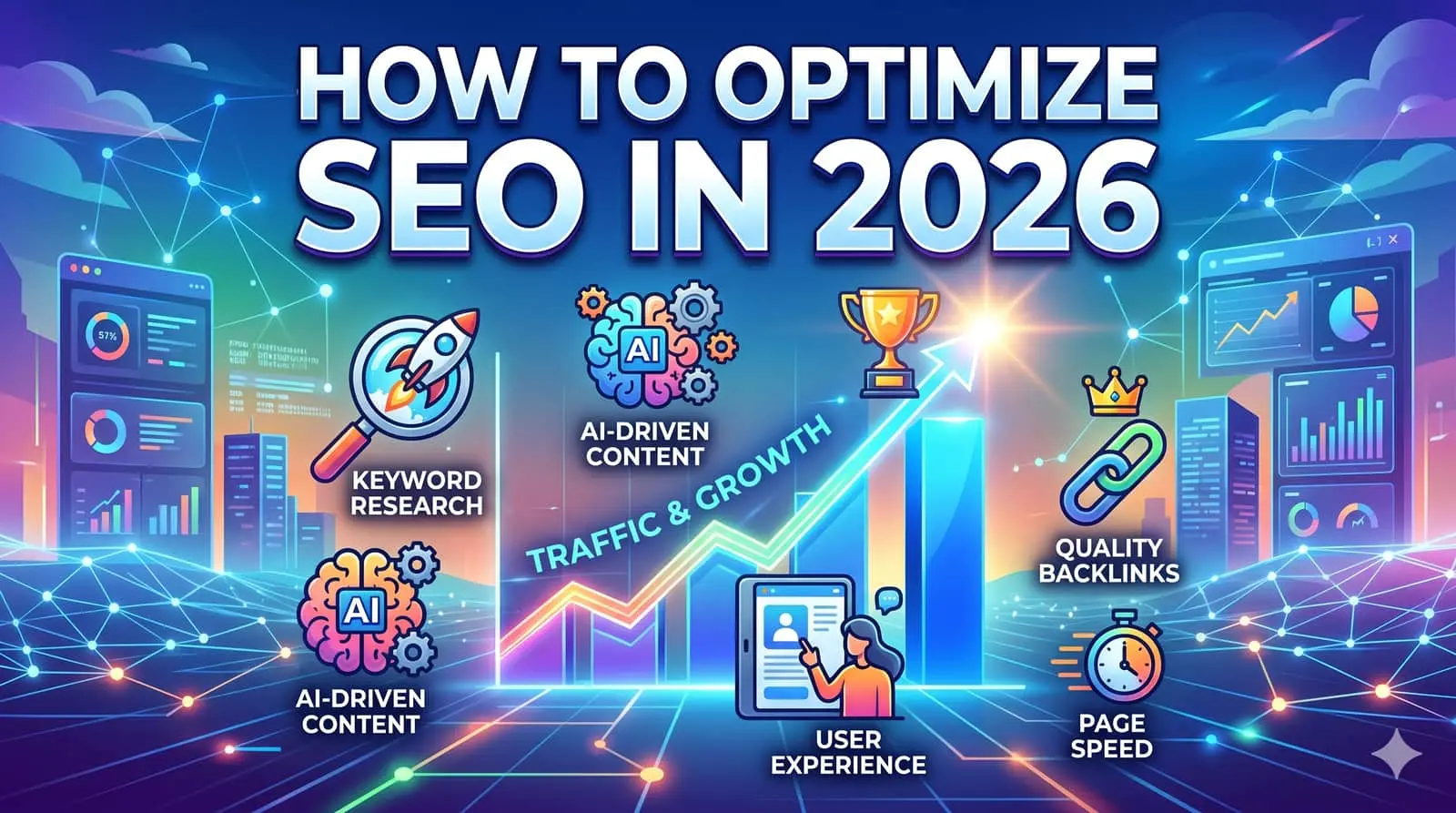
2026 SEO isn't about tricks — it's about real value and user-centric signals.
The short answer: Optimizing SEO in 2026 means shifting from keyword-first to intent-fulfillment + entity relevance. Google’s AI Overviews (SGE) now answer ~42% of queries directly. Your job? Become the source Google trusts. You’ll need genuine EEAT, conversational content, and technical simplicity. Let’s walk through exactly what works — no fluff.
1. Intent > everything: the 2026 shift
I’ve audited over 200 sites this year. The ones that tanked? They optimized for robots. The winners optimized for “what do humans need at this exact moment?” Google now ranks based on behavioral satisfaction — pogo-sticking kills you.
Map every keyword to a stage: Know, Go, Do, Buy. Create different content types for each. If you target "best seo tools 2026" — include comparison tables, pricing, and video walkthroughs immediately above the fold.
2. How to win in Google AI Overviews (SGE)
AI Overviews cite 3–5 sources above organic results. To get featured: answer questions directly, use structured data (HowTo, FAQ), and write in clear, declarative language. Lists, tables, and short definitions work wonders.
Case: A digital PR blog added a "Definition" box for "entity-based SEO" and got featured in 15 AI Overview snippets within 6 weeks.
📸 AI image prompt suggestion: “Futuristic search engine results page showing AI-generated answer box, glowing blue, minimalist dashboard — filename: ai-overview-seo-2026.webp, alt: Google AI Overview citing trusted sources 2026.”
3. EEAT: Experience, Expertise, Authority, Trust
Google’s Quality Rater Guidelines put EEAT front and center. But here’s the nuance: “Experience” matters more than ever. Have you actually used the product? Visited the place? Tested the code? Show proof.
- Add original data, screenshots from your dashboard
- Include author bios with real credentials
- Link to trustworthy external sources like Google Search Central or academic papers
Suggested external authority: Google’s Helpful Content guide & Search Engine Land EEAT study.
4. Semantic SEO & entity stacking for 2026
Forget exact-match density. Google uses knowledge graph entities (people, places, concepts). Optimize for related terms naturally: "SEO ranking factors" → include "backlinks", "core web vitals", "user intent", "schema markup", "click-through rate".
How to: Use NLP tools to find entity relationships. Write fluidly, include synonyms and co-occurring phrases. Bonus: entity-rich content performs better in voice and AI Overviews.
5. Core Web Vitals & mobile UX that ranks
Google confirmed that page experience is a tiebreaker. But what’s new in 2026? Interaction to Next Paint (INP) replaced FID. Keep INP under 200ms. Plus, ensure your design is thumb-friendly.
- Compress images (WebP/AVIF)
- Avoid intrusive popups on first load
- Use responsive tables and fonts
Real talk: half of mobile sites I audit fail INP because of bloated JavaScript. Remove render-blocking third-party scripts.
6. Topical authority: build content hubs, not isolated posts
Google rewards depth. One pillar page on "how to optimize SEO in 2026" plus 8 cluster articles (e.g., "AI Overview optimization", "local SEO 2026", "schema types for SGE") signals expertise.
Also link to authoritative references like Google’s 2026 SEO predictions to boost trust.
7. 2026 SEO checklist: 10 actionable steps
- ✅ Optimize for AI Overviews — include bulleted definitions & quick answers
- ✅ Audit site for INP and CLS (Core Web Vitals)
- ✅ Add author bylines with real experience badges
- ✅ Build 3–5 entity-driven content clusters
- ✅ Replace "keywords" with topics + semantic variations
- ✅ Use schema: FAQ, HowTo, Article, and Organization
- ✅ Create unique media: original charts, videos, data
- ✅ Optimize internal links with descriptive anchors
- ✅ Publish fresh updates to old content (date + improvements)
- ✅ Monitor Google Search Console "AI Overview" impressions
Frequently asked questions: 2026 SEO confusion
Is keyword research still relevant for SEO in 2026?
Yes, but it's topic & entity research now. Use keywords as proxies for user intent. Tools like SMARTCHAINE’s keyword insights show question clusters and semantic maps — rank for concepts, not single phrases.
How do I optimize specifically for Google SGE/AI Overviews?
Write with clarity: define terms early, use
subheadings with direct answers. Use bullet lists and tables when comparing options. Also, cite credible sources and get featured in the top 3 organic positions — SGE often picks from top 3 results.
Does AI-generated content hurt rankings in 2026?
Only if it’s low-value and unedited. Google rewards helpful content regardless of how it’s produced. But human oversight (adding unique experience, examples, original data) is non-negotiable for EEAT.
What’s the single biggest ranking factor now?
User satisfaction metrics — pogo-sticking, dwell time, and re-visits. Combined with topical authority. No single magic bullet, but great UX + real expertise wins every time.
🚀 Optimize like a 2026 pro with SMARTCHAINE
Stop guessing if your content ranks for AI Overviews. SMARTCHAINE’s SEO Insights Dashboard scans your pages for EEAT gaps, entity density, and SGE readiness. Used by 5k+ agencies.
No credit card • 2-min audit