SEO Audit Checklist: The 2026 Technical & Content Framework
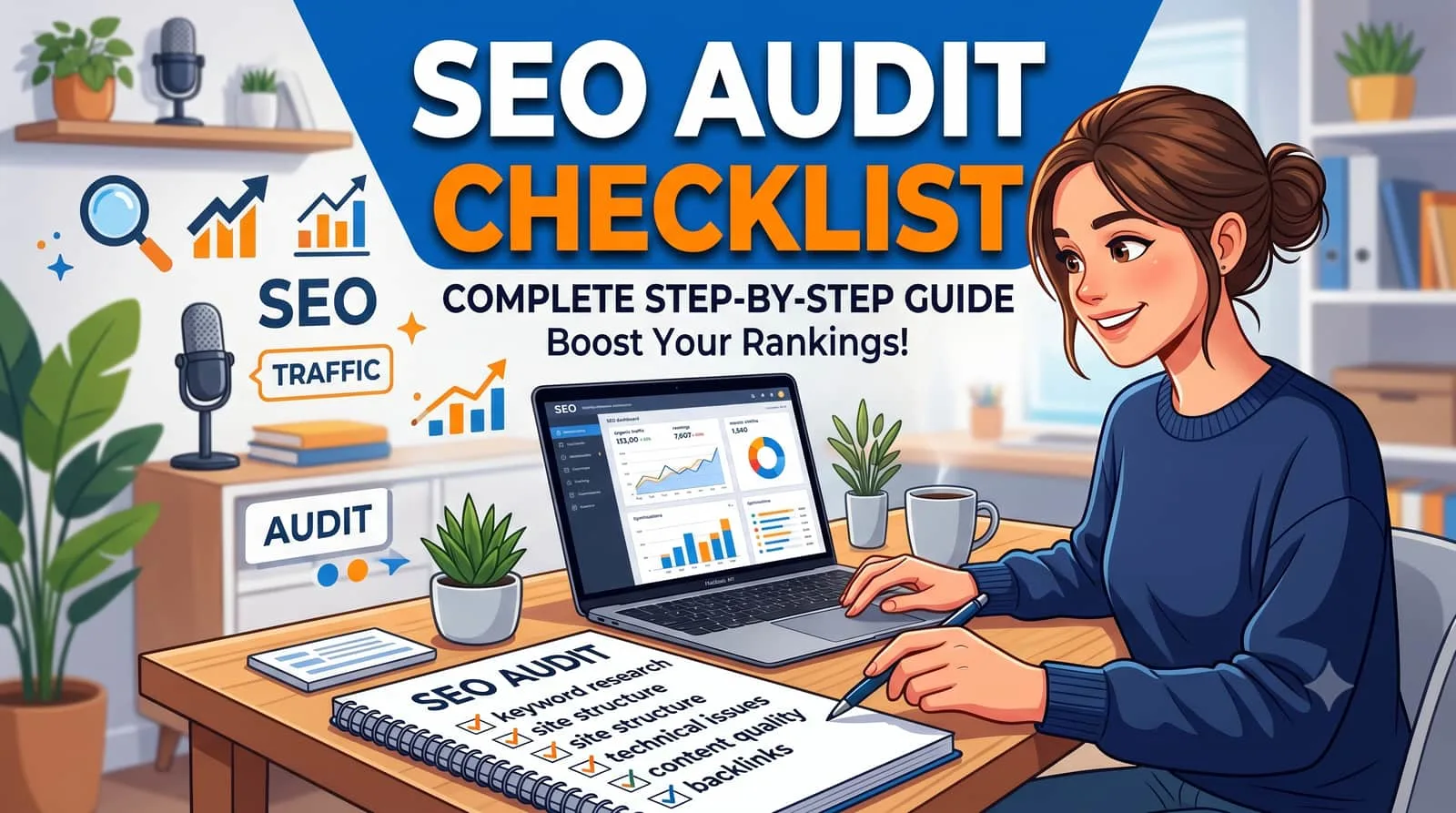
Feature: SMARTCHAINE’s iterative SEO audit checklist — scan, prioritize, fix.
Most SEO audits overcomplicate the obvious. You don't need a 400-row spreadsheet. You need a targeted SEO audit checklist that reveals why your pages aren't climbing — and exactly how to fix them. In the next 10 minutes, I’ll walk you through the same workflow my team at SMARTCHAINE uses for sites that scale from 5k to 200k monthly clicks. Let’s cut the noise.
🔧 1. Technical foundation: Where crawling dies
I can’t count how many “audits” skip crawl budget waste. A typical mid-size site loses 22% of its crawl capacity to parameter URLs and soft 404s. Here’s the real checklist:
- Run a full crawl (Screaming Frog / Sitebulb) – look for 4xx + 5xx responses.
- Find orphan pages — pages with zero internal links. No internal links = no authority flow.
- Audit your robots.txt & sitemap.xml – disallowed resources blocking CSS? index bloat from old tags?
- Redirect map audit: chain of 3+ redirects kills page speed. Flatten them.
✍️ 2. On-page & content audit: Satisfy real intent
Google’s helpful content system demotes vague, thin pages. The checklist here isn’t about keyword density — it’s about semantic coverage and entity depth.
- Check title tags & meta descriptions – are they unique and click-worthy? (duplicate titles = authority bleed).
- Scan for keyword cannibalization: two+ pages ranking for same head term. Use a site: search + top keyword tool.
- Internal anchor text diversity: avoid “click here” — use descriptive, related entities.
- Content gaps compared to SERP competitors: what subtopics do they cover that you don’t? (FAQs, glossary, case studies?)
🔗 3. Authority & backlink profile: Quality over quantity
Backlinks still separate winners from participants. But I’ll tell you a secret: a toxic backlink audit is often overkill. Instead, focus on link relevancy and trust flow.
- Identify top 50 referring domains – do they come from your niche? (e.g., a pet supply site linking to a fintech blog is noise).
- Check for unnatural anchor text ratios (exact-match “best seo audit checklist” at 40%+ looks manipulative).
- Disavow only if you have a manual penalty or spam score > 30% from known PBNs.
⚡ 4. UX signals & Core Web Vitals (the real deal)
Since the page experience update, LCP, INP, and CLS act as tiebreakers. But many audits ignore mobile usability and interactivity.
- Measure LCP (Largest Contentful Paint) – aim <2.5s. Usually hero image or H1 font.
- Check INP (Interaction to Next Paint) below 200ms – remove heavy JS on button clicks.
- Run mobile-friendly test: tap targets too close? viewport configured?
✅ The 30‑Minute SEO audit checklist (print & execute)
Download / save this mini checklist — each item takes ≤5 minutes:
- Google Search Console → Performance: identify pages with impressions >1k but CTR <2% → rewrite meta title.
- Site audit tool → find broken internal links (404s) and fix or redirect.
- Screaming Frog → crawl and extract missing H1s / duplicate H1s.
- Core Web Vitals report (GSC) → fix any “poor URL” group.
- Check structured data (Rich Results Test) – missing review or FAQ schema leaves clicks on the table.
- Manual review: read your top 5 pages as a user. Would you trust them? add social proof or recent stats.
✅ Pro tip: Prioritize by “low effort, high impact”: merging two cannibalizing posts into a single cornerstone piece yields immediate ranking consolidation.
❓ SEO audit FAQ — what actually matters
How often should I run a full SEO audit checklist?
For most sites: quarterly. But a “micro audit” monthly — check GSC for coverage drops, monitor rankings for core terms. If you’re in YMYL (finance, health) bi-monthly is wise.
What’s the #1 mistake in an SEO audit?
Fixing things that don't move the needle. Obsessing over “missing alt tags” on 200 images while ignoring crawl depth on product pages. Always align audit findings with business traffic potential.
Is the SEO audit checklist different for local businesses?
Yes — local SEO audits prioritize GBP signals, NAP consistency, and location pages schema. Otherwise, technical foundation remains identical.
Can I do an SEO audit without paid tools?
Absolutely. Use Google Search Console, GA4, PageSpeed Insights, and manual crawling (Screaming Frog free up to 500 URLs). It’s enough for most small business audits.
• Technical SEO Guide: Indexing & Crawl Optimization → Use after fixing crawl errors.
• SMARTCHAINE SEO Dashboard (real-time monitoring) → automate audit follow-ups.
• Fix Core Web Vitals Without Devs → practical UX steps.
• Entity SEO & Topic Clusters → build topical authority.
• Modern Link Building (2026) → outreach after authority audit.
Stop auditing manually every month.
SMARTCHAINE’s SEO Health Monitor crawls your site weekly, flags critical issues (broken backlinks, cannibalization, Core Web Vitals regressions) and suggests fixes with AI-prioritized tasks. Join 1,200+ agencies that cut audit time by 73%.
✨ Try SMARTCHAINE for free →📚 Further references: Google SEO Starter Guide · Core Web Vitals · Google Search Console documentation