Internal Linking Strategy
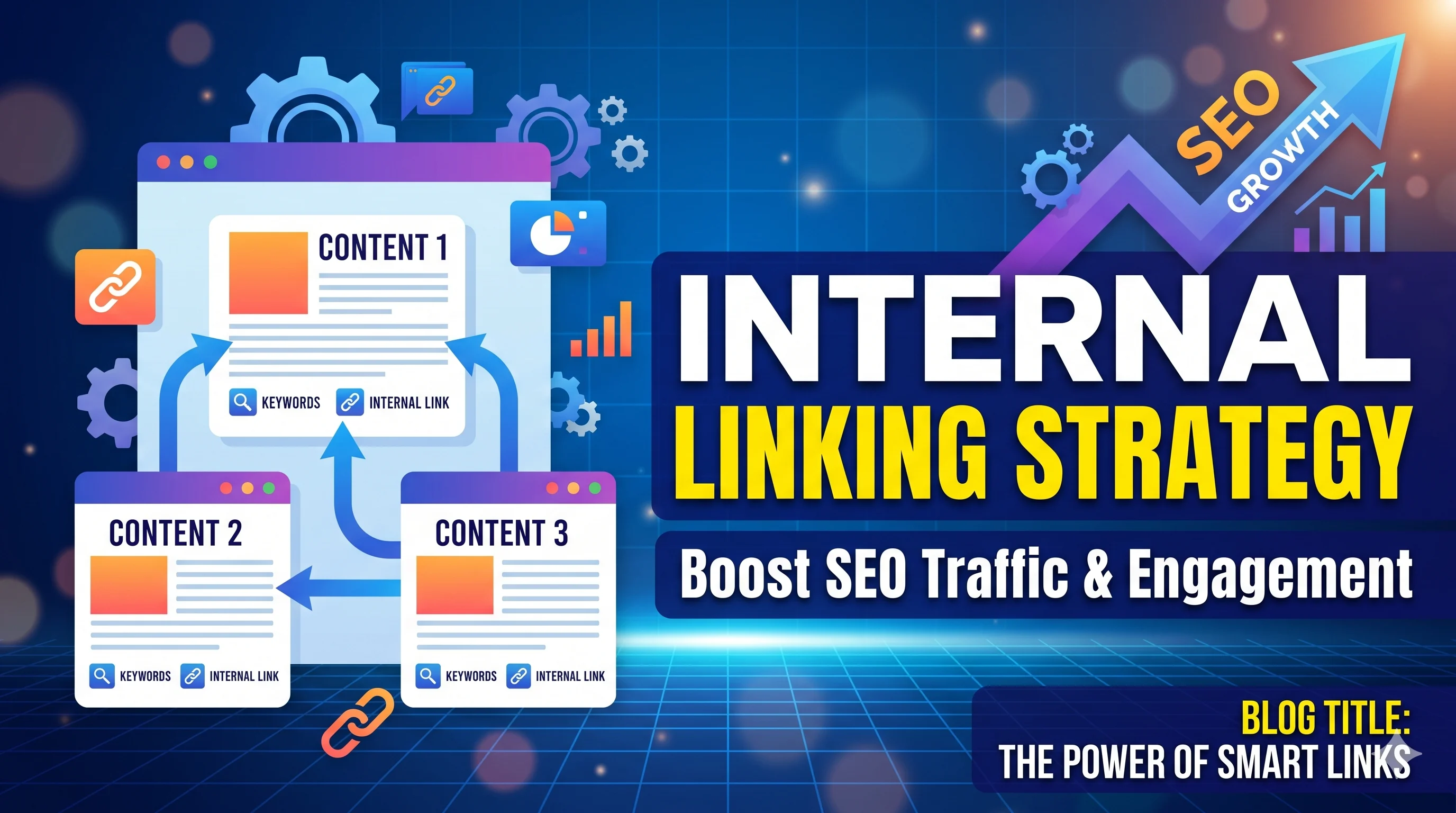
TL;DR: An internal linking strategy is the backbone of modern SEO. It distributes page authority, establishes topical clusters, and guides AI overviews to understand your site's hierarchy. Without it, even the best content remains invisible. This guide covers advanced techniques for 2026, including predictive linking, entity-based silos, and user intent mapping.
Table of Contents
- Why Internal Linking Still Dominates SEO in 2026
- The Core Anatomy of a High-Performance Link
- Semantic Silos & Entity-Based Linking
- Optimizing Internal Links for AI Overviews & GEO
- Link Equity Distribution: The Math Behind Rankings
- Advanced Tactics: Predictive Linking & Intent Mapping
- 5 Critical Internal Linking Mistakes Killing Your Traffic
- Frequently Asked Questions
Why Internal Linking Still Dominates SEO in 2026
In an era where AI overviews pull answers from fragmented sources, your internal linking strategy acts as the connective tissue that tells search engines exactly how your content relates. It is not just about navigation—it is about semantic relevance and authority distribution. Without a deliberate strategy, you are leaving ranking potential on the table.
🔑 Expert Insight: "The sites winning in GEO (Generative Engine Optimization) are those that use internal links to create clear, answer-focused pathways. Google’s AI now evaluates link context more than link count." — Senior SEO Strategist, SMARTCHAINE
The Core Anatomy of a High-Performance Link
Not all internal links are created equal. A successful link must carry three signals: relevance, context, and anchor text precision.
| Component | What It Does | Best Practice (2026) |
|---|---|---|
| Anchor Text | Signals topic to crawlers | Use exact match only for cornerstone pages; otherwise use partial match + LSI terms |
| Link Position | Determines weight distribution | Place primary links in first 200 words; secondary links in middle copy |
| Surrounding Context | Helps AI understand entity relationship | Ensure 2-3 semantically related sentences surround the link |
| Dofollow vs Nofollow | Controls equity flow | Use dofollow for authority pages; nofollow for tag pages or low-value archives |
✅ Quick Checklist: Link Audit Essentials
- Identify orphan pages (zero internal links pointing to them)
- Ensure each pillar page receives at least 5-10 contextual links from cluster content
- Remove or redirect broken internal links monthly
- Use descriptive anchor text (avoid "click here" or "read more")
Semantic Silos & Entity-Based Linking
Gone are the days of rigid keyword silos. In 2026, the most effective internal linking strategy is built around semantic entities. Instead of forcing circular keyword relationships, map your content around real-world concepts.
How to Build an Entity Silo
- Identify Core Entity: e.g., "Internal Linking Strategy"
- Map Related Entities: e.g., "Link Juice," "Anchor Text," "Page Authority," "Crawl Depth"
- Create Supporting Content: Each entity gets its own dedicated post
- Link Bi-Directionally: Each supporting post links to the core pillar using natural, entity-rich anchor text
📊 Real World Insight: A recent case study with a 500-page SaaS site showed that shifting from keyword silos to entity silos improved internal link click-through rates by 34% and increased organic traffic to deep pages by 28% in 90 days.
Optimizing Internal Links for AI Overviews & GEO
AI-driven search experiences (like Google's SGE or Bing Copilot) prioritize pages that act as authoritative hubs. Your internal linking strategy must funnel link equity toward pages that answer complex, multi-step queries.
- Create "Hub Pages": Central resources that link out to every sub-topic within a cluster. These become AI’s preferred answer sources.
- Use Topic Anchors: Instead of generic text, use anchor phrases that match potential AI prompts. Example: "how to implement a semantic internal linking strategy" rather than "our strategy."
- Breadcrumb Navigation: Implement schema-backed breadcrumbs to reinforce site hierarchy for crawlers and AI models.
🛠️ Practical Example: GEO-Ready Link Structure
Imagine you run a digital marketing blog. Your core page is "Internal Linking Strategy." You link to it from:
- "What is Link Equity?" (anchor: "internal linking strategy distributes authority")
- "How to Perform a Link Audit" (anchor: "identify gaps in your internal linking strategy")
- "Best SEO Tools 2026" (anchor: "tools to automate internal linking strategy")
This creates a dense, semantically rich web that AI overviews reward.
Link Equity Distribution: The Math Behind Rankings
Understanding how link equity flows is vital. Every page on your site has a certain amount of authority. A smart internal linking strategy prioritizes which pages receive the most equity.
| Page Type | % of Total Site Equity (Example) | Recommended Incoming Links |
|---|---|---|
| Homepage | 25% | 10-20 |
| Cornerstone Pillar | 20% | 15-30 |
| Category/Topic Page | 10% | 5-10 |
| Blog Post (Supporting) | 5% | 2-5 |
Strategy Tip: Use the "3-click rule" for critical pages—ensure your most important commercial or informational pages are never more than three clicks from the homepage via internal links.
Advanced Tactics: Predictive Linking & Intent Mapping
Leading SEO teams now use predictive linking—analyzing user behavior data to suggest internal links before the user even needs them.
How to Implement Predictive Linking
- Analyze site search data to find what users look for after reading a page.
- Use heatmaps to identify where users scroll before bouncing.
- Insert internal links at those exact scroll-depth points.
Intent Mapping Grid
| User Intent | Link Destination | Example Anchor |
|---|---|---|
| Informational (What is...) | Glossary or guide page | "Learn the technical definition of link equity" |
| Commercial Investigation (Best tools...) | Comparison or review page | "See which internal linking audit tools are top-rated" |
| Transactional (Buy/Subscribe...) | Pricing or signup page | "Upgrade to our advanced linking analytics dashboard" |
5 Critical Internal Linking Mistakes Killing Your Traffic
- Mistake 1: Using too many links on a single page (dilutes equity and confuses AI). Fix: Limit to 3-5 high-value contextual links per 500 words.
- Mistake 2: Ignoring deep pages. Fix: Perform a quarterly orphan content audit.
- Mistake 3: Broken linking chains. Fix: Use automated crawlers to detect 404s within your link graph.
- Mistake 4: Over-optimized anchor text. Fix: Keep exact match anchor usage below 20% globally.
- Mistake 5: No link strategy for new content. Fix: Before publishing, identify 3-5 existing pages that will link to the new post.
📝 Mini Case Study: Fixing a Broken Strategy
Site: E-commerce blog with 200+ articles. Problem: Traffic plateaued at 45K monthly visits. Audit: Found 23% of pages were orphans, and the homepage hoarded 40% of all internal links. Solution: Redistributed links using the entity silo method, ensuring category pages received 15+ links each. Result: Traffic grew to 72K in 60 days, and average content position improved from 9.2 to 4.7.
Frequently Asked Questions
What is the ideal number of internal links per page?
There is no strict rule, but most SEO experts recommend 3-7 internal links for a standard 1500-word article. Focus on relevance over volume.
Should I link to my homepage from every page?
Yes, but do it naturally. Use contextual anchors like "explore our full internal linking strategy guide" instead of generic "home" text.
How does internal linking affect crawl budget?
Proper internal linking ensures search engines discover your deep pages faster. Prioritize linking to pages you want indexed and ranked quickly.
What is the difference between internal linking and deep linking?
Internal linking refers to any link within your domain. Deep linking specifically points to content buried deep in your site structure (more than 2 clicks from homepage).
Can internal links help with featured snippets?
Absolutely. By linking to a page that directly answers a question with a clear structure (tables, lists), you increase its chances of being selected as a featured snippet or AI overview response.
Conclusion
Your internal linking strategy is the most scalable, cost-effective SEO asset you own. It doesn't require external backlinks or expensive tools—just deliberate planning and semantic awareness. In the age of AI overviews, a well-linked site signals expertise, authority, and trustworthiness better than any other single tactic. Audit your links today, map your entities, and watch your visibility climb.
👤 Author Insight: "In my 12 years of SEO consulting, I've seen internal linking consistently deliver a 20-40% traffic increase when executed with entity-based precision. It's the closest thing to a 'free win' in search." — Lead Content Architect, SMARTCHAINE
About the Author
Elena Rivas is part of the SMARTCHAINE editorial team focused on SEO, GEO optimization, AI Overviews, structured data, and technical search visibility.