Knowledge Graph SEO: How to Build Entities That Rank in 2026
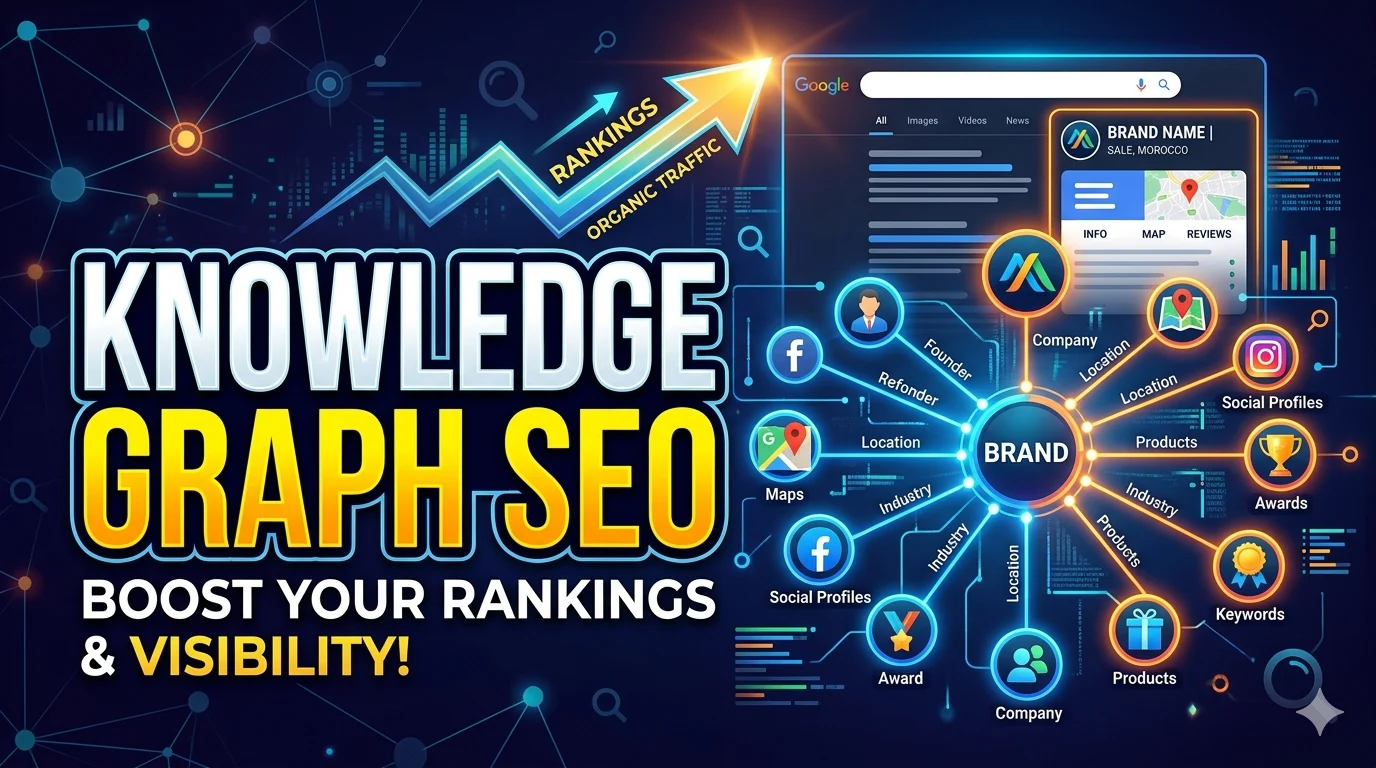
Table of Contents
- What Is Knowledge Graph SEO in 2026?
- The Entity Optimization Framework
- Schema Markup That Actually Entitles You
- Building Entity-Centric Content
- How This Applies in Practice
- 5 Common Knowledge Graph SEO Mistakes
- Actionable Checklist
- Frequently Asked Questions
- Conclusion
What Is Knowledge Graph SEO in 2026?
In 2026, Google no longer just ranks pages—it ranks entities. The Knowledge Graph has evolved from a Wikipedia-powered sidebar feature into the backbone of AI Overviews, rich snippets, and multi-turn conversational search. If your website or brand is not recognized as a distinct entity in Google’s database, you are competing with one hand tied behind your back.
Knowledge Graph SEO is the discipline of making your entity discoverable, recognizable, and authoritative through three core levers:
- Structured data that mirrors Schema.org ontology
- Entity signal consistency across platforms
- Relationship mapping that connects your entity to other trusted entities
After reading this guide, you will be able to audit your current entity presence, implement a structured approach to Knowledge Graph optimization, and understand how to qualify for entity-based search features without gambling on unreliable "quick fix" tactics.
The Entity Optimization Framework
Rather than throwing random schema code at your pages, use this three-tier evaluation. Score your entity presence qualitatively from Low (1) to High (3) for each layer.
| Layer | Low (1) | Medium (2) | High (3) |
|---|---|---|---|
| Identity Clarity | No structured data or inconsistent NAP | Organization schema present but minimal | Multiple entity types linked (Organization, Person, WebSite) |
| Relationship Signals | No external references to your entity | Listed on 2-3 directories or Wikipedia references | Cross-linked with industry authorities (e.g., Google Knowledge Panel, Wikidata) |
| Content Authority | Generic blog posts with no entity focus | Topic clusters with entity annotations | Entity-centric content that ranks for "X is a" or "X founded" queries |
When to use this framework: Use it during your quarterly SEO audit to prioritize which layer needs attention. Avoid trying to score 3 on all layers in a single sprint—entity authority takes time.
Expert Tip
Google’s Knowledge Graph is built from multiple sources, not just your website. Even if your schema markup is flawless, you need third-party confirmations. Look at what shows up in a site:en.wikipedia.org YourBrand search. If nothing appears, your entity authority will remain limited regardless of on-page optimization.
Schema Markup That Actually Entitles You
Not all schema helps with Knowledge Graph visibility. Focus on these specific types because they map directly to entities Google recognizes:
Organization Schema (The Bare Minimum)
Every business or brand should implement Organization schema. Include sameAs properties linking to your verified social profiles, Wikidata entry, and official website. This tells Google that your website represents the same entity as your LinkedIn, Crunchbase, and Wikipedia pages.
Person Schema for Individuals
If your brand is tied to a founder, CEO, or key author, implement Person schema with affiliation, knows, and sameAs properties. This is how Google connects a real human to your organization entity.
Product and Review Schema for Ecommerce
For ecommerce, Product schema with brand and offers properties helps Google understand that your product entity belongs to your brand entity. Without this connection, your products may appear as orphaned listings.
Real-world example: A mid-size electronics retailer implemented Organization schema on their homepage and Product schema on their product pages. They also added sameAs links to their Amazon storefront and Google Business Profile. Within three months, they began appearing as a verified seller entity in Google Shopping tabs and their knowledge panel updated to include their product categories.
Building Entity-Centric Content
Traditional blog posts target keywords. Entity-centric content targets relationships. When you write about your company history, collaborations, or industry role, you reinforce the entity graph.
The Relationship Mapping Workflow
- List your entity's key relationships: suppliers, partners, clients, competitors, industry bodies
- Create content that explicitly names and links to these entities (using proper schema where possible)
- Use natural language phrases like "YourBrand was co-founded by PersonName" or "YourBrand partnered with PartnerBrand"
- Monitor Google Search Console for queries that include your brand name + "is" or "was"
Why this works: Google's Knowledge Graph learns from co-occurrence patterns and explicit relationship statements. The more clearly you define your connections, the more likely Google is to add them to your entity profile.
How This Applies in Practice
Beginner Website (Blog or Personal Brand)
Start with Person schema on your about page and a single sameAs link to your LinkedIn or GitHub. Create one "About Me" page that explains your professional relationships—where you studied, who you worked with, what industry you operate in. Do not add Organization schema unless you actually have a registered business entity.
SaaS Website
Implement Organization, SoftwareApplication, and WebSite schema. Add applicationCategory and offers properties. Create a "Company" page that lists investors, board members, and key partnerships. Link to your Crunchbase and G2 profile using sameAs.
Ecommerce Store
Use Organization + Product + BreadcrumbList schema. Add brand property to every product schema. Your Google Merchant Center feed should be linked to your Google Business Profile. Create content around your manufacturing process or supplier relationships to build entity depth.
Local Business
Implement LocalBusiness schema with areaServed and openingHoursSpecification. Ensure your Google Business Profile name, address, and phone number match your schema. Create location-specific content that mentions other local entities (chamber of commerce, local events) to reinforce geographic entity connections.
5 Common Knowledge Graph SEO Mistakes
| Mistake | Why It Fails | What to Do Instead |
|---|---|---|
| Using placeholder NAP data | Google compares your schema against Google Maps and GMB | Align every instance of your name, address, and phone number exactly |
| No sameAs links | Without cross-references, your entity appears isolated | Add at least 3 verified sameAs links: LinkedIn, Wikipedia/Wikidata, and one industry database |
| Entity spam (over-claiming) | Claiming multiple entities from the same domain looks suspicious | Stick to one Organization and one Person entity per website |
| Ignoring Wikidata | Google heavily weights Wikidata for Knowledge Graph entries | Create or update your Wikidata entry with accurate properties |
| Static schema with no updates | Google's Knowledge Graph refreshes periodically based on new signals | Review and update your schema every 6 months, especially sameAs links |
Actionable Checklist
Use this checklist to audit your Knowledge Graph SEO readiness:
- Organization or Person schema implemented on homepage or about page
- sameAs properties include at least 3 verified external profiles
- Wikidata entry exists and matches your schema data
- Google Business Profile is verified and matches schema NAP
- Entity-specific content (about page, partnerships, history) is published
- No conflicting entity claims across different pages
- Structured data is tested via Google's Rich Results Test
- Relationship mappings are documented for quarterly review
Frequently Asked Questions
How long does it take to appear in Google's Knowledge Graph?
There is no guaranteed timeline because Google's Knowledge Graph is a machine learning system that builds entity profiles over time. For well-known brands with existing Wikipedia pages and established online presence, it can take weeks. For smaller businesses starting from zero, expect 3 to 6 months of consistent optimization before you see entity-related features like knowledge panels or enhanced rich results in AI Overviews.
Does Knowledge Graph SEO help with voice search and AI assistants?
Yes. Siri, Google Assistant, and Alexa pull entity data from Google's Knowledge Graph or similar databases. When your entity is optimized, AI assistants can answer questions like "Who founded your brand?" or "What does your company do?" with accurate information. This is especially valuable for brand awareness in zero-query scenarios where users ask about businesses by name.
Can I optimize my Knowledge Graph without Wikipedia?
Absolutely. While Wikipedia is a strong signal, many businesses never qualify for a Wikipedia article. You can build entity authority through Wikidata entries, Crunchbase profiles, LinkedIn company pages, and industry-specific databases (G2, Capterra, Google Business Profile). The key is having multiple verified sources that consistently describe the same entity with the same attributes.
What happens if my schema data contradicts my Wikidata entry?
Google's Knowledge Graph system must reconcile conflicting signals. If your schema says your company was founded in 2020 but Wikidata says 2022, Google may delay adding your entity to the Knowledge Graph entirely until the conflict resolves. Always audit your cross-platform data for accuracy and consistency before expecting entity recognition.
Is Knowledge Graph SEO the same as local SEO?
No, but they overlap significantly. Local SEO focuses on maps and local pack results, while Knowledge Graph SEO covers entity recognition across all search features, including AI Overviews, knowledge panels, and rich snippets. If you run a local business, you need both—Knowledge Graph optimization strengthens your entity, while local SEO ensures it appears in geographic search results.
Do I need different schema for different search engines?
Schema.org is a shared standard, but Google and Bing use entity data differently. Bing maintains its own entity graph and may prioritize data from Bing Webmaster Guidelines sources. For best results, follow the same Schema.org markup universally, but also submit your data directly to each search engine's webmaster tools if they offer entity submission features.
Conclusion
Knowledge Graph SEO in 2026 is less about chasing specific markup and more about building a coherent, verified, and consistent entity identity across the web. Start with the Entity Optimization Framework to understand where you stand, fix the common mistakes, and apply the workflow differences for your website type. Google's Knowledge Graph rewards patience, consistency, and verifiable relationships—not shortcuts or inflated claims.
If you are doing traditional SEO without considering entity signals, you are optimizing for a search engine that no longer exists. Shift your focus to entity-centric optimization and you will find your content appearing in AI Overviews, knowledge panels, and conversational search results where standard page-level optimization cannot reach.
Recommended Resources
- Google Search Central – Official guidance on structured data and entity recognition
- Schema.org – The complete schema vocabulary reference
- Moz Blog – Entity optimization and SEO strategy discussions
About the Author
The SMARTCHAINE Editorial Team specializes in SEO, AI Search Optimization, GEO (Generative Engine Optimization), AI Overviews, Structured Data, Technical SEO, and search visibility strategies for modern search engines and AI-powered discovery platforms.