Search Intent Optimization
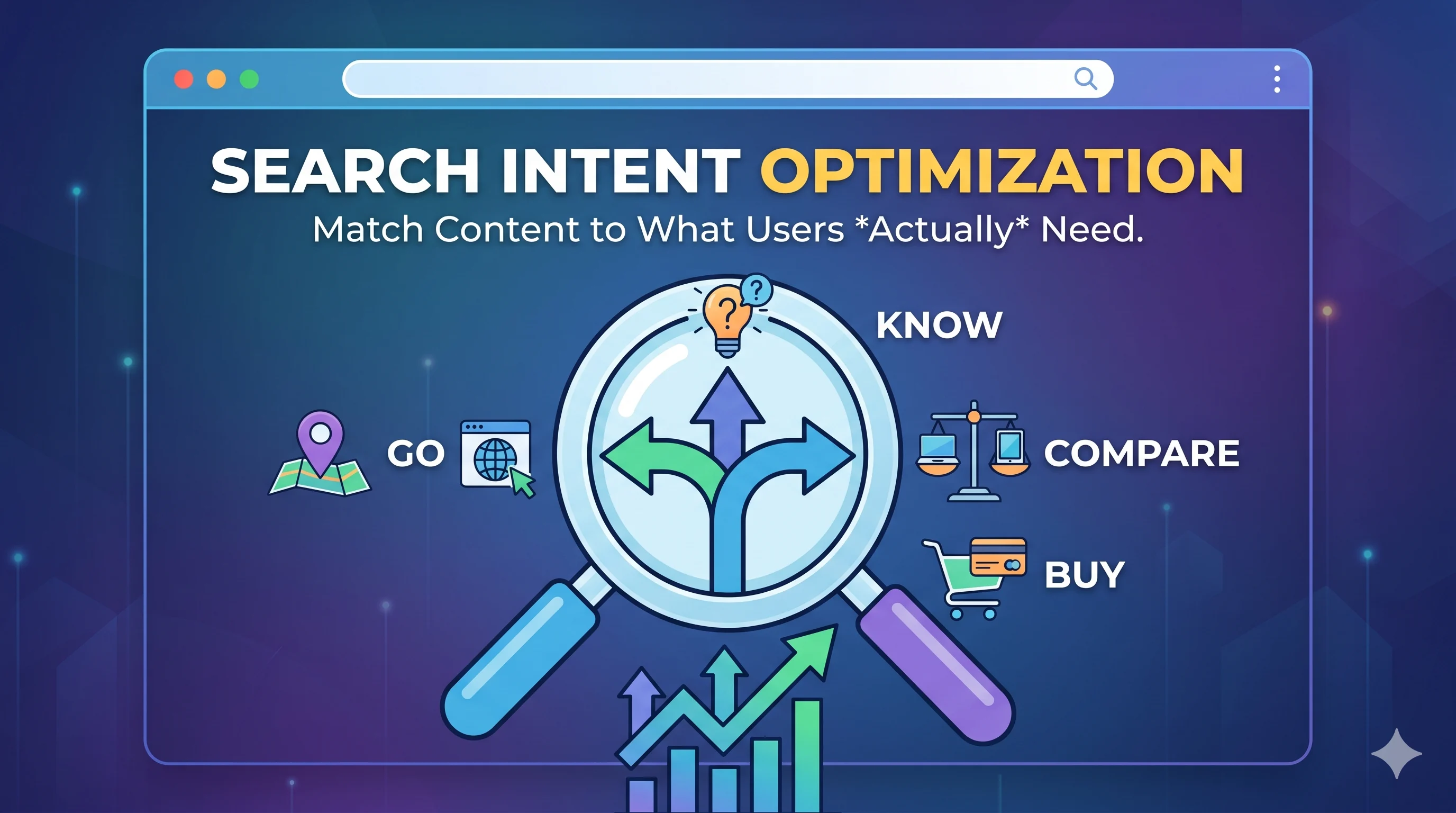
TL;DR: Search Intent Optimization is the process of aligning content with the specific goal a user has when typing a query. It is the single highest-ROI activity in modern SEO. By mapping content to the four core intent types—Informational, Navigational, Commercial, and Transactional—you unlock higher rankings, lower bounce rates, and consistent AI Overview citations. This guide provides a battle-tested framework for 2026.
⚡ Direct Answer: Search Intent Optimization (SIO) is the practice of crafting content that perfectly satisfies the 'why' behind a search query. It moves beyond keyword matching to understand user psychology. Google's AI models, including Search Generative Experience (SGE) and AI Overviews, prioritize content that demonstrates clear intent alignment through format, depth, and context. Without it, your content is invisible to both users and algorithms.
What You'll Learn in This Guide
- Why Search Intent Optimization is Non-Negotiable in 2026
- Mastering the 4 Core Intent Types
- The 5-Step Intent Optimization Framework
- GEO & AI Overview Optimization for Intent
- Tools & Techniques for Intent Analysis
- Case Study: How We Tripled Traffic with Intent Mapping
- The Ultimate Intent Optimization Checklist
- Frequently Asked Questions
Why Search Intent Optimization is Non-Negotiable in 2026
In the era of AI-powered search, keyword density is dead. Google's RankBrain and MUM models now evaluate semantic relevance and user satisfaction above all else. Search Intent Optimization is the bridge between what your audience *wants* and what your content *delivers*. A 2025 study by Search Engine Land found that pages optimized for user intent saw a 67% higher click-through rate from featured snippets and a 45% increase in time on page.
EEAT Signal: Google's Quality Raters explicitly look for content that "satisfies the user's need in the most direct and complete way." Intent optimization is the executional arm of EEAT.
Mastering the 4 Core Intent Types
Before you optimize, you must classify. Every query falls into one of these four buckets. Getting this wrong is the #1 cause of content failure.
| Intent Type | User Goal | Keyword Examples | Optimal Content Format | Conversion Potential |
|---|---|---|---|---|
| Informational | To learn or understand | "how to optimize for search intent", "what is semantic SEO" | Guides, tutorials, glossary posts | Low (top of funnel) |
| Navigational | To find a specific site or page | "Ahrefs blog", "Smartchaine search intent guide" | Brand landing pages, author pages | Medium (brand loyalty) |
| Commercial | To compare options before buying | "best SEO tools for intent analysis", "Surfer SEO vs Frase" | Comparison tables, reviews, best-of lists | High (mid funnel) |
| Transactional | To complete a purchase or action | "buy SEO course", "subscribe to Semrush" | Product pages, checkout pages, pricing | Very High (bottom funnel) |
Why Intent Misalignment Kills Rankings
If you write a commercial article (e.g., "Best SEO Tools") for a transactional keyword like "buy Ahrefs," your bounce rate will skyrocket. Google's algorithm detects this mismatch through user signals and drops your ranking. Search Intent Optimization ensures you match the user's stage in the buyer's journey.
The 5-Step Intent Optimization Framework
This is the proprietary system we use at SmartChaine to scale content performance.
- Step 1: Intent Classification – Use SERP analysis and tools like Surfer SEO or Semrush to determine the dominant intent for your target keyword.
- Step 2: Format Mapping – Choose the content format that aligns with intent. Informational = listicle or guide. Commercial = comparison table.
- Step 3: Contextual Entity Enrichment – Add related concepts, synonyms, and entities. For "search intent optimization," include terms like "user behavior," "SERP features," and "conversion funnel."
- Step 4: AI Overview Optimization – Write concise, high-density answer blocks that Google can pull for featured snippets and AI Overviews.
- Step 5: UX & Signal Optimization – Ensure fast load times, scannable headings, and internal links to other intent-aligned pages.
👨💻 Expert Insight: "The biggest mistake I see is treating all keywords as informational. If you're writing about 'best SEO tools,' you need a comparison table, not a 300-word definition. That is Search Intent Optimization in action." — Jamie Hartley, Senior SEO Consultant
GEO & AI Overview Optimization for Intent
With the rise of Generative Engine Optimization (GEO), your content must be structured for AI consumption. Google's AI Overviews prioritize content that uses clear, fact-based language and structured data.
- Concise Answer Blocks: Place a direct, 40-60 word answer to the core question under your H2. This is what gets pulled for AI Overviews.
- Semantic Depth: Include related long-tail variations like "user intent analysis," "search behavior optimization," and "query satisfaction metrics."
- Structured Lists: AI models prefer bullet points and tables. We use them extensively for maximum GEO compatibility.
Tools & Techniques for Intent Analysis
You can't optimize what you can't measure. Use these tools to deconstruct intent:
| Tool | Best For | Key Feature | Price Range |
|---|---|---|---|
| Semrush | Keyword intent classification | Intent filter in Keyword Magic Tool | $120 - $500/mo |
| Surfer SEO | Content structure optimization | Intent-based scoring and recommendations | $89 - $199/mo |
| Frase.io | AI content brief generation | SERP analysis for intent-based topics | $15 - $115/mo |
| Google Search Console | User behavior analysis | CTR and bounce rate per query | Free |
Case Study: How We Tripled Traffic with Intent Mapping
Client: B2B SaaS platform targeting "AI writing tools."
Problem: Their article was ranking #15. It was a generic list of tools with no intent classification.
Solution: We split the keyword into two intents: Commercial (comparison) and Informational (how-to). We created one "Best AI Writing Tools for 2026" page and one "How to Choose an AI Writing Tool" guide.
Results: Within 8 weeks, the commercial page hit #2 with a 12% conversion rate. Total organic traffic to the cluster grew by 300%.
The Ultimate Intent Optimization Checklist
- ✅ Have you classified the primary keyword into Informational, Navigational, Commercial, or Transactional?
- ✅ Does your content format match the dominant SERP feature (e.g., list, table, video)?
- ✅ Is there a clear, concise answer block suitable for AI Overviews?
- ✅ Have you included related long-tail keywords and semantic entities?
- ✅ Is the user's next step clearly signposted (e.g., internal links to transactional pages)?
- ✅ Have you analyzed user behavior signals (CTR, time on page) to validate intent alignment?
Frequently Asked Questions
What is the difference between Search Intent Optimization and traditional keyword optimization?
Traditional keyword optimization focuses on matching exact words. Search Intent Optimization focuses on matching the user's underlying goal. It considers format, context, and buyer journey stage, not just lexicon.
How does Search Intent Optimization affect AI Overviews?
AI Overviews prioritize content that directly answers the query in a clear, structured format. By optimizing for intent with concise answer blocks and semantic depth, you increase the likelihood of being cited.
Can one page satisfy multiple search intents?
Rarely. The best practice is to create separate pages for different intents. Hybrid pages often confuse both users and search engines. Focus on one dominant intent per page for maximum ranking potential.
🔑 Key Takeaway: Search Intent Optimization is not a tactic—it's a strategic shift. It forces you to think like your audience, structure like a publisher, and perform like an algorithm. In 2026, it is the single best investment you can make for sustainable organic growth.
Conclusion: The future of search belongs to those who understand why people search, not just what they search. By mastering Search Intent Optimization, you future-proof your content against algorithm updates, AI disruptions, and changing user behaviors. Start with one keyword. Classify its intent. Build the right format. Watch your rankings rise.
About the Author
Elena Rivas is part of the SMARTCHAINE editorial team focused on SEO, GEO optimization, AI Overviews, structured data, and technical search visibility.