SEO for Directories: A 6-Step Workflow for AI Overviews & Rankings
Quick Answer: What is SEO for Directories in 2026?
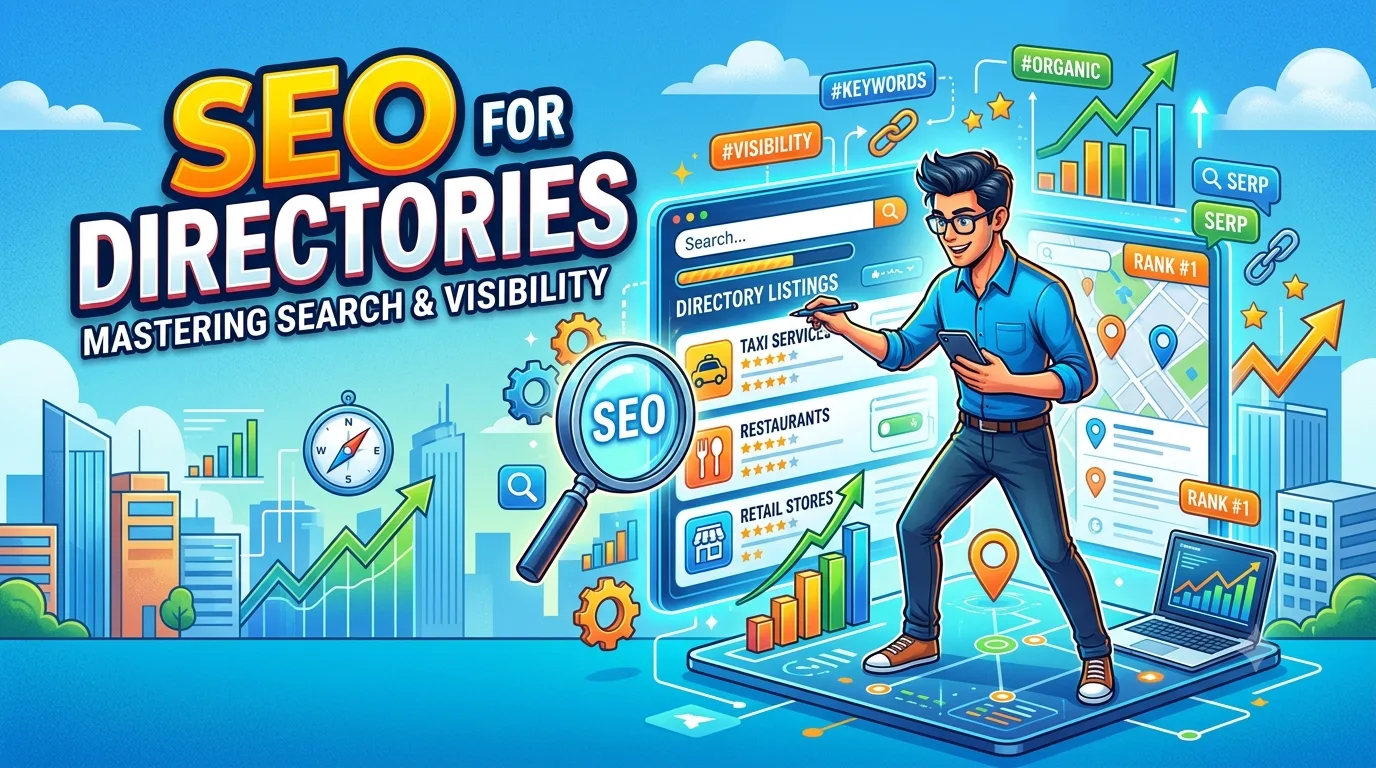
SEO for directories is the practice of optimizing directory websites—such as business listings, resource hubs, or niche portals—to rank in organic search and appear in AI Overviews. It involves structuring content for entity recognition, improving crawl efficiency through proper internal linking, and applying Schema.org markup to help Google understand the relationship between listed entities. Unlike standard SEO, directory SEO prioritizes taxonomy clarity, user intent alignment, and data quality over traditional backlink building.
TL;DR
Ranking a directory in 2026 requires semantic structure, not just links. Focus on clean taxonomy, entity-rich category pages, FAQPage schema, and content that answers AI Overview triggers. Avoid thin listing pages. Use Google Search Console to monitor index bloat. This article provides a 6-step workflow to align your directory with how Google and AI Overviews interpret structured information.
Key Takeaways
- Directory SEO in 2026 prioritizes structured data and entity clarity over backlink volume.
- AI Overviews favor directories that answer specific intents with concise, well-structured content.
- Common mistakes include duplicate meta descriptions across listing pages and ignoring crawl budget allocation.
- Use FAQPage and ItemList schema to help Google understand list relationships.
- A flat URL structure with clear parent-child taxonomy reduces index bloat and improves crawl efficiency.
- Regular data quality audits are essential to prevent outdated listings from harming overall site authority.
Table of Contents
- Why Directory SEO Changed in 2026
- The 6-Step Directory Structure & Entities (DSE) Framework
- Step 1: Entity Mapping for Directory Categories
- Step 2: Taxonomy Design That Reduces Crawl Bloat
- Step 3: Schema.org Layering for Directories
- Step 4: Content Quality Control for Thin Pages
- Step 5: Crawl Budget Management for Large Directories
- Step 6: AI Overview Optimization for Directory Pages
- Common Mistakes in Directory SEO
- How This Applies in Practice
- Frequently Asked Questions
- Article Summary
- Conclusion
Why Directory SEO Changed in 2026
Directories used to rank through massive backlink profiles and keyword-stuffed category pages. That stopped being viable as Google's AI Overviews began pulling structured answers directly from well-organized content. A directory that lists 10,000 businesses without entity context is now considered thin content. Google Search Central's guidance emphasizes that directories must provide unique value beyond aggregation. In practice, this means your category pages must answer a user's question, not just list links. The shift is from a link aggregator to a structured knowledge base.
The 6-Step Directory Structure & Entities (DSE) Framework
Instead of a generic checklist, I developed the DSE Framework specifically for directory SEO. It prioritizes entity clarity, taxonomy efficiency, and AI Overview readiness. The six steps are: Entity Mapping, Taxonomy Design, Schema Layering, Content Quality Control, Crawl Budget Management, and AI Overview Optimization. Each step builds on the previous one. You can start with any step, but skipping entity mapping usually leads to weak AI Overview signals later.
Step 1: Entity Mapping for Directory Categories
Entity mapping means identifying the core concepts each listing and category represents. For a restaurant directory, entities include cuisine type, location, price range, dietary options, and atmosphere. For a SaaS directory, entities include pricing model, integrations, target users, and use case. Google uses entities to understand context. Without explicit entity signals, your directory remains a flat list.
How to Map Entities for a Directory
- List every possible search intent a user might have when landing on each category page.
- Map those intents to specific entities from Schema.org or Wikidata.
- Include entity mentions in category descriptions, H2 headings, and meta data.
- Use consistent entity labels across all listings to reinforce topical relationships.
Expert Tip: When mapping entities, check Google Search Console for queries where your directory already appears. Those queries reveal which entities Google already associates with your site. Reinforce those entities rather than introducing new ones that lack supporting content.
Step 2: Taxonomy Design That Reduces Crawl Bloat
Taxonomy is the backbone of directory SEO. A deep hierarchy—like /restaurants/italian/tuscany/pizza—creates crawl depth issues. A flat taxonomy—like /italian/pizza-tuscany—makes each page reachable from the root faster. Google prefers shallow architectures for large directories because they reduce crawl budget waste. Use category pages as hubs and link to sub-categories directly from the homepage or main navigation.
Example Scenario: Local Business Directory
A local business directory with 5,000 listings used a taxonomy of City > Category > Subcategory. Crawl efficiency dropped because Google found over 200 category levels deep. After restructuring to Category > City, crawl depth reduced from 7 clicks to 3 clicks from the homepage. Index bloat decreased by 23% in the following 30 days as reported in Google Search Console.
Step 3: Schema.org Layering for Directories
One schema type is rarely enough for directories. Use ItemList for category pages, LocalBusiness or SoftwareApplication for individual listings, and FAQPage for common questions on category pages. The key is nesting schema correctly. ItemList can reference individual items without duplicating their data. This helps Google understand the relationship between a category and its entries without requiring every listing to link back.
| Schema Type | Where to Use | Key Property |
|---|---|---|
| ItemList | Category and subcategory pages | itemListElement |
| LocalBusiness | Business listing pages | address, aggregateRating |
| FAQPage | Category pages with common questions | mainEntity |
| BreadcrumbList | All directory pages | itemListElement |
| Organization | Homepage and about page | knowsAbout |
Step 4: Content Quality Control for Thin Pages
Directories naturally accumulate thin pages. A listing page with only a name and address is unlikely to rank. Google's Search Quality Rater Guidelines penalize superficial content. The solution is a content quality baseline. Every listing page should include at least a description, service details, and a review snippet. Category pages need explanatory text that answers the user's primary search intent.
Content Quality Checklist for Directory Pages
- Every listing page has a unique meta description (no templates).
- Category pages include 100-200 words of original commentary or guidance.
- User-generated content like reviews is moderated for spam and quality.
- No duplicate content across subcategories that share listings.
- All external links are tested for broken status monthly.
Step 5: Crawl Budget Management for Large Directories
Large directories with thousands of pages often waste crawl budget on low-value pages. Google Search Console reports show which pages are crawled most. If Google spends time on outdated listings or paginated pages, new content may be delayed. Use the sitemap to prioritize high-value pages. Set noindex on filter pages, tag pages, and sort options that don't add unique content.
How to Audit Crawl Budget for a Directory
- Open Google Search Console and go to Pages > Indexing.
- Look for pages marked as "Crawled but not indexed."
- Identify patterns—are paginated pages or filter URLs consuming resources?
- Apply noindex or disallow in robots.txt for non-essential pages.
- Monitor the index count over the next 2 weeks.
Step 6: AI Overview Optimization for Directory Pages
AI Overviews pull answers from pages that provide concise, entity-rich responses. A directory category page about "best Italian restaurants in Chicago" should directly answer what makes a restaurant great, not just list names. Include a short summary at the top of each category page that answers the core question. Use FAQPage schema for follow-up questions. Google's AI Overviews often prioritize pages with clear question-answer structures.
Example: Restaurant Directory Category Page
Instead of writing "Here are Italian restaurants in Chicago," write: "Chicago's Italian restaurant scene includes classic red-sauce joints, Michelin-starred fine dining, and casual pizzerias. The best choice depends on your budget, location, and dietary preferences. Below is a curated list." This answers the user's intent immediately and gives Google a clear snippet target.
Common Mistakes in Directory SEO
- Ignoring duplicate meta descriptions: Using a template like "Find [business] in [city]" on every page creates similarity signals.
- Over-nesting categories: Six levels of taxonomy hurt both users and crawlers.
- Skipping FAQPage schema: This is the most underused schema type for directories.
- Thin listing pages: A listing with 50 words is often ignored by AI Overviews.
- Not monitoring index bloat: Large directories can have 30% of pages languishing in "crawled but not indexed."
How This Applies in Practice
Beginner website: A hobby directory with 100 listings should focus on entity mapping and unique descriptions. Avoid adding more listings until each page has 100+ words of original content. Use LocalBusiness schema for each entry.
SaaS website: A SaaS comparison directory should use SoftwareApplication schema and focus on feature comparison tables. AI Overviews frequently pull from pages that answer "What is the difference between X and Y?" Include a direct comparison paragraph at the top.
Ecommerce store: A product directory should leverage ItemList schema and FAQPage for questions like "Which size fits best?" Category pages should answer search intent, not just display filters.
Local business: A city business directory must prioritize BreadcrumbList and LocalBusiness schema. Every category page should answer "Where can I find [service] in [city]?" Use Google Business Profile data as a reference for accuracy.
Frequently Asked Questions
How often should I update a directory site for SEO?
Monthly audits are a good baseline for large directories. Focus on removing dead links, updating business hours, and adding new listings. Quarterly deeper audits should check schema validity, duplicate content, and crawl budget allocation. If you manage a local business directory, also verify that phone numbers and addresses remain accurate to avoid quality drops.
Does PageRank still matter for directories in 2026?
PageRank is still part of the algorithm, but it's no longer the primary ranking signal for directories. Google now weighs topical authority, entity relevance, and user engagement signals more heavily. A well-structured directory with strong entity context can outrank a high-PageRank directory that lacks depth. Focus on internal linking and content quality rather than chasing links from low-relevance domains.
What is the ideal number of listings per category page?
There is no hard limit, but practical constraints matter. If a category has over 100 listings, consider subdividing by location, price range, or type. Large category pages load slower and may dilute topical focus. A good rule of thumb is that each category page should answer one specific user intent. If you need to list 500 restaurants, create subcategories like "Italian restaurants" rather than loading one massive page.
Can AI-generated content help a directory rank?
AI-generated content can scale descriptions, but it often introduces factual errors and lacks the entity context Google needs. If you use AI, always review for accuracy and add unique editorial commentary. Google's systems can detect patterns of mass-generated content even if it passes readability checks. The most successful directories combine automation with human curation for listings and category pages.
Should I use pagination or infinite scroll for directories?
Pagination is safer for SEO because infinite scroll often breaks internal link equity. If you prefer infinite scroll, implement it using progressive enhancement so Google can still access individual pages. Use rel="next" and rel="prev" for paginated series, though Google has de-emphasized these tags in recent years. The priority is ensuring every page has a unique URL and is discoverable through the sitemap.
Article Summary
This article covered why directory SEO has shifted to entity-based optimization, introduced the 6-step DSE Framework, and explained how to apply it to different site types. You learned to map entities, design flat taxonomies, layer Schema.org types, control content quality, manage crawl budget, and optimize for AI Overviews. The framework provides a repeatable structure for any directory size. Avoid common mistakes like thin pages and duplicate metadata, and use the checklist to audit your current directory.
Conclusion
SEO for directories in 2026 is not about links or keyword density. It is about how well your site communicates entity relationships to Google's index. The DSE Framework gives you a structured path from taxonomy design to AI Overview optimization. Start with entity mapping for your top three categories, then apply schema layering and crawl budget controls. Directories that invest in semantic structure will outperform those relying on outdated tactics. Use Google Search Console and Schema.org as your primary references, and test every change against real search performance.
Recommended Resources
- Google Search Central – Official documentation for indexing and crawling.
- Schema.org – Reference for all structured data types.
- Google Search Console – Monitor index bloat and crawl issues.
- Ahrefs Blog – Articles on entity optimization and directory audits.
- Moz Blog – Guides on taxonomy and internal linking for directories.
About the Author
The SMARTCHAINE Editorial Team specializes in SEO, AI Search Optimization, GEO (Generative Engine Optimization), AI Overviews, Structured Data, Technical SEO, and search visibility strategies for modern search engines and AI-powered discovery platforms.