Commercial Intent Keywords: How to Find and Convert High-Value Search Queries
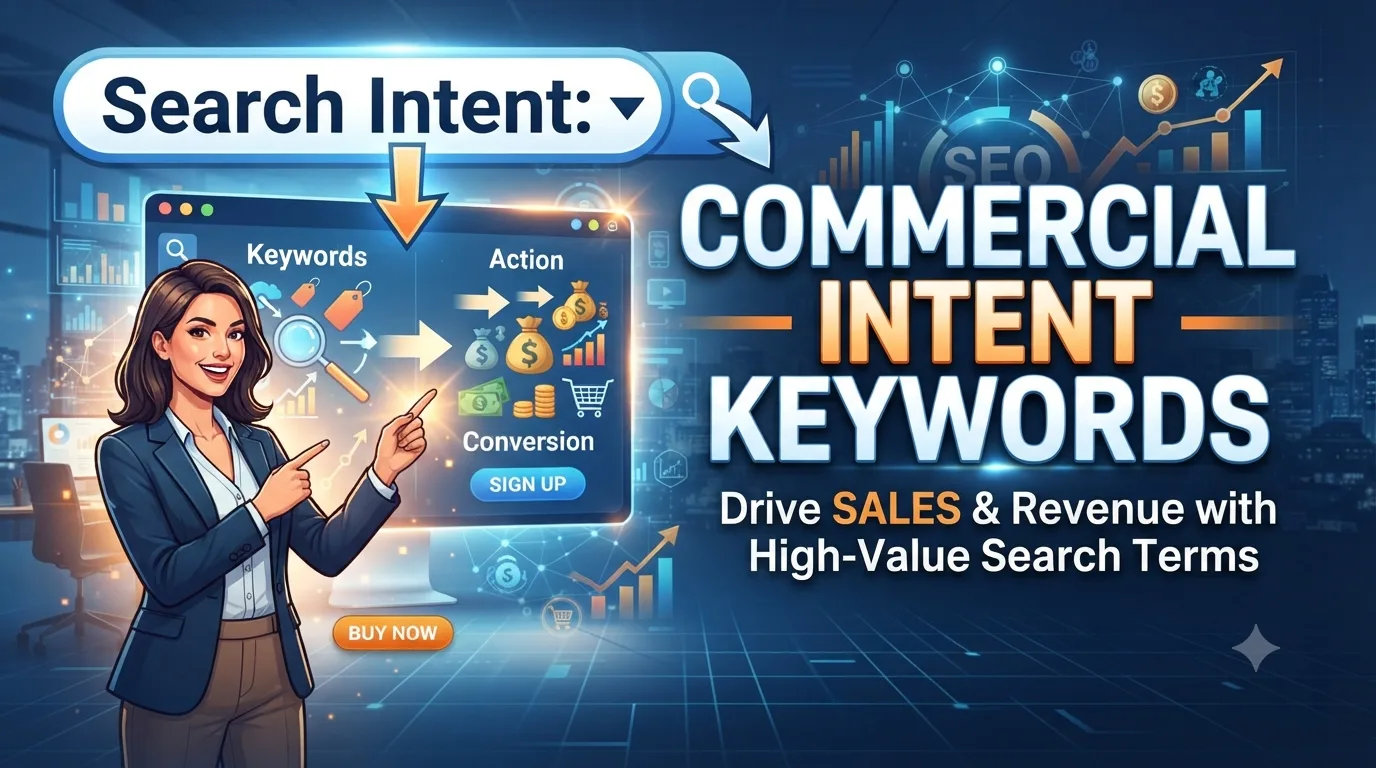
Commercial intent keywords are the bridge between research and transaction. They include modifiers like “best,” “vs,” “reviews,” and “pricing.” Identifying them requires combining search console data, SERP analysis, and conversion tracking. This article walks through a practical triage framework, common pitfalls, and how to adjust your strategy for different business models—so you stop chasing traffic that never buys.
Key Takeaways
- Intent over volume: A lower-volume commercial query often converts better than a high-volume informational term. Evaluate queries by their likelihood to drive revenue, not just search demand.
- Modifier signals are practical indicators: Words like “best,” “compare,” “price,” “buy,” “discount,” and “reviews” consistently signal commercial intent across industries.
- SERP features reveal intent: If Google displays shopping ads, product carousels, or review snippets, the query almost certainly carries commercial weight—use this as a fast filtering technique.
- A structured triage process prevents waste: Applying a deliberate framework (like the one in this article) stops you from assigning high-value content resources to queries that will barely nudge the bottom line.
- Different business models need different trigger words: Ecommerce, SaaS, and local businesses all benefit from commercial intent, but the exact query patterns that matter differ—and generic lists rarely account for that.
Contents
- What Are Commercial Intent Keywords?
- Commercial Intent vs. Transactional and Informational Queries
- Why Commercial Intent Keywords Matter for SEO and Conversions
- How to Identify Commercial Intent Keywords
- Common Mistakes When Targeting Commercial Intent Keywords
- The Commercial Intent Triage Framework
- How This Applies in Practice
- FAQ
- Article Summary
What Are Commercial Intent Keywords?
Commercial intent keywords are search terms that express a user’s active interest in purchasing, evaluating, or comparing products and services. These queries sit between research-heavy informational searches and immediate-action transactional searches. Google Search Central’s guidelines on quality and content relevance emphasize satisfying the user’s intent, and for commercial queries that typically means delivering comparison content, pricing transparency, and decision-support information.
How Commercial Intent Manifests in Search
These keywords often appear as:
- Product/service comparisons: “best crm for small business,” “shopify vs woocommerce”
- Review-oriented queries: “asana reviews 2026,” “laptop buying guide”
- Pricing and feature investigations: “salesforce pricing per user,” “free accounting software”
- Category exploration with buying signals: “affordable seo tools,” “top-rated wireless headphones”
From a structured data perspective, pages targeting commercial intent keywords can benefit from Product, Review, or HowTo schema (as defined on Schema.org) to enhance rich results. However, adding schema doesn’t change intent—it merely helps the search engine understand your page’s purpose. The real work starts with query analysis.
Commercial Intent vs. Transactional and Informational Queries
Distinguishing commercial intent from transactional and informational queries prevents misaligned content strategies. A commercial query suggests the user is evaluating options but hasn’t committed to a purchase, while a transactional query indicates readiness to buy, sign up, or download. Informational queries seek knowledge without immediate purchase intent. Overlap exists, but treating them as the same damages conversion metrics and SEO planning.
Intent Comparison Table
| Intent Type | Query Examples | Typical SERP Features | Best Content Format |
|---|---|---|---|
| Informational | “what is structured data,” “how does core web vitals work” | Featured snippets, knowledge panels, People also ask | Blog posts, guides, explainers |
| Commercial | “best project management tool,” “ahrefs vs semrush pricing” | Shopping ads, review snippets, comparison tables, product carousels | Comparison pages, review articles, category landing pages |
| Transactional | “buy iphone 16,” “sign up for quickbooks online” | Shopping ads, local pack, direct purchase carousels, forms | Product detail pages, checkout-optimized landing pages |
When commercial and transactional queries get mixed, you risk optimizing a product page for “best CRM” when it should be a comparison guide, or building a lengthy review post when users want to buy immediately. Google’s AI Overviews increasingly surface product-rich results for commercial queries, making it even more important to match page format to the expected answer.
Why Commercial Intent Keywords Matter for SEO and Conversions
Commercial intent keywords matter because they align organic search traffic with revenue. Unlike broad informational terms that can attract visitors who never intend to convert, a well-targeted commercial query brings users who are already evaluating purchases. This increases the likelihood of capturing email sign-ups, free trial starts, or direct sales—without inflating traffic metrics that look good in reports but contribute little to the bottom line.
In Google Search Console, under the Performance report, filter queries containing commercial modifiers (“best,” “cheap,” “discount,” “review”) and compare their average position and CTR to purely informational queries you rank for. If those commercial terms show high impressions but low click-through, you may have a meta description or title mismatch—fixing it can improve conversion without any new backlinks.
Commercial Intent in the Era of AI Overviews
AI Overviews do not eliminate the need for commercial intent understanding—they reshape how pages appear for these queries. When a user searches “best ergonomic office chair 2026,” an AI Overview might summarize multiple product comparisons, pulling from well-structured comparison pages and review content. If your page uses clear heading structures, product markup, and side‑by‑side comparison tables, it becomes more extractable for these snapshots. This isn’t about gaming the system; it’s about making your content machine-readable and genuinely helpful for decision‑making.
How to Identify Commercial Intent Keywords
Identifying commercial intent keywords combines query data, SERP observation, and conversion metrics—all without relying on guesswork. The goal is to surface terms that signal evaluation or purchasing behavior, then validate them with real signals from Google Search Console, analytics, and keyword tools like Ahrefs or Semrush. Here’s the workflow:
1. Audit Existing Queries for Modifier Patterns
Export the last 3–6 months of your Google Search Console query data (under Performance → Queries). Filter for terms containing words like “best,” “vs,” “top,” “cheap,” “review,” “buy,” “price,” “discount,” “deals,” or “alternative.” Sort by clicks and conversions (if Google Analytics goals are integrated). Flag queries that drive traffic but have low bounce rates or assist conversions—those are likely strong commercial intent candidates.
2. Analyze SERP Features Quickly
Enter potential keywords into an incognito or location-neutral search. If Google shows shopping ads, product carousels, review snippets, or a “stories” format with ratings, the query has commercial intent. For example, “backup software for mac” triggers review articles and comparison sites, while “how to backup mac” returns a featured snippet with steps—a clear informational signal. Use this visual scan before investing in content creation.
3. Use Keyword Tool Filters
In Ahrefs or Semrush, apply built-in intent filters (both platforms identify “Commercial” separately from “Transactional” and “Informational”). Cross-reference the keyword difficulty score and traffic potential with your own threshold. A keyword like “small business payroll service” may show moderate difficulty and steady volume—ideal for a well-optimized comparison page. Avoid targeting only high-difficulty terms; even long-tail commercial variants like “cheap payroll service for startups” can convert well with lower competition.
4. Validate with Conversion Data
Nothing confirms commercial intent like actual conversions. In Google Analytics, create segments for organic traffic landing on pages that target suspected commercial queries. Measure goal completions, ecommerce transactions, or assisted conversions. If a “best marketing automation tools” post consistently drives sign‑up form submissions, you have real intent evidence. Conversely, a “how to automate email marketing” guide may get high traffic but few conversions—that’s fine if awareness is the goal, but don’t mislabel it as commercial intent.
Common Mistakes When Targeting Commercial Intent Keywords
Many site owners treat commercial intent as a binary flag—either a query is “buying” or it isn’t. This oversimplification leads to misaligned content, missed conversion opportunities, and wasted resources. Below are the most frequent missteps and how to avoid them.
Mistakes to Avoid
- Optimizing transactional pages for commercial queries: Sending users searching for “best employee monitoring tools” to a product demo page creates mismatch. Create comparison content first, then offer a natural path to the product.
- Ignoring local commercial intent: A query like “affordable plumbing services dallas” has clear commercial intent but requires local SEO signals—Google Business Profile, NAP consistency, and location pages. Generic service pages won’t compete.
- Neglecting review structure: For queries such as “siteground vs bluehost,” including Review or Product schema helps, but many sites only add schema to transactional product pages. This limits rich result visibility for comparison posts.
- Focusing on head terms only: “CRM software” is too broad. Long-tail commercial variations like “HIPAA‑compliant CRM for small clinics” reduce competition and attract qualified users—yet are often ignored.
- Not updating aging commercial content: A “best VPN services” post from two years ago may list discontinued providers or outdated pricing. Google’s freshness considerations for commercial content mean regularly refreshing these pages matters.
When refreshing commercial intent content, don’t just change dates. Re-evaluate the intent landscape—has a new competitor entered the market? Have pricing models shifted? Use tools like Semrush’s Position Tracking to see if new SERP features (like “Popular Products”) have appeared, and adjust your page accordingly.
The Commercial Intent Triage Framework
Rather than guessing which commercial queries deserve your most effort, use a qualitative triage system. This framework combines query deconstruction, SERP feature analysis, and conversion mapping to assign each keyword to a priority bucket—High, Watch, or Low—based on signals you already have access to. No proprietary formulas needed; it relies on observation and documented criteria.
Triage Steps
- Query Deconstruction: Remove brand or navigational parts. Focus on the core modifier and product category. If the phrase contains “best,” “vs,” “reviews,” “cheap,” or “pricing,” move to Step 2.
- SERP Feature Assessment: Search the query in a privacy‑aware browser. Mark down which shopping, review, or carousel features appear. If Google surfaces a “Popular Products” strip or “Review units” from trusted sites, assign High commercial signal.
- Conversion Mapping: Determine if the query maps to a concrete action you can track—demo request, free trial, consultation call, or direct purchase. If no clear conversion path exists, deprioritize.
- Priority Bucket Assignment: Using a simple checklist (below), classify the keyword. A keyword that passes all checks lands in the High bucket; those that partially pass go into Watch; those that fail conversion mapping go to Low.
Priority Assignment Checklist
| Check | Yes | No |
|---|---|---|
| Does the query contain a commercial modifier? | ✅ | ❌ |
| Does the SERP show at least one shopping or review feature? | ✅ | ❌ |
| Can you map this query to a measurable conversion goal? | ✅ | ❌ |
| Is the search volume stable and not artificially spiked by a one‑time event? | ✅ | ❌ |
| Does your site have content or authority that can realistically compete for this query within 4–6 months? | ✅ | ❌ |
Interpretation: 5 “Yes” → High priority | 3–4 “Yes” → Watch list (test with a dedicated page or post) | 0–2 “Yes” → Low priority (reassess quarterly).
How This Applies in Practice
Commercial intent keywords are not a one-size-fits-all concept. The approach changes depending on your site’s maturity, business model, and audience behavior. Below are practical applications for four common scenarios, each with distinct strategies and pitfalls.
Beginner Website (Low Domain Authority)
Focus on long-tail commercial queries with low difficulty. Instead of “best running shoes,” target “best running shoes for flat feet under $100” and create an authentic, experience‑based comparison post. Use product review schema sparingly, if genuinely applied, to signal content type. Avoid aggressive monetization at this stage—build trust.
SaaS Website
Prioritize “vs” and “alternative” queries. For example, a project management SaaS might create pages like “monday.com vs asana pricing” or “jira alternatives for small teams.” Embedding transparent pricing and integration comparisons into those pages helps users self‑qualify. Use WebPage or Article schema along with a breadcrumb list for site-wide navigation benefits. Many SaaS companies make the mistake of hiding pricing behind a lead form on these pages—commercial intent users often leave when they can’t find a clear cost comparison.
Ecommerce Store
Commercial intent keywords here overlap with transactional signals. Category pages optimized for “buy organic cotton baby clothes” need product carousels, structured data with Offer and Review markup, and clear purchase paths. Meanwhile, blog posts answering “best organic baby clothes for eczema” should link seamlessly to the category pages. Don’t treat these as separate silos; commercial intent queries often move from blog post to product page rapidly.
Local Business
Local commercial intent requires location‑anchored modifiers: “affordable divorce lawyer near me,” “emergency plumber Dallas 24/7.” Optimize your Google Business Profile, collect reviews, and embed schema types like LocalBusiness on your location page. A hypothetical scenario: A dental clinic targeting “best teeth whitening dentist Austin” could create a dedicated service page with before‑after visuals, patient FAQ (using FAQPage schema), and a direct appointment‑booking link. Commercial intent here depends on proximity and trust signals, not just keyword optimization.
For local commercial intent, Bing’s Webmaster Guidelines reinforce the importance of consistent NAP (Name, Address, Phone) data and clear service descriptions. While Google dominates, aligning with Bing’s local ranking factors often improves visibility across search ecosystems.
FAQ
How do commercial intent keywords affect SEO ROI differently than informational keywords?
Commercial intent keywords typically bring visitors further down the funnel, so the return on investment ties more directly to conversions rather than raw traffic growth. While informational terms build brand awareness and topical authority—often necessary for long‑term search presence—commercial queries let you measure value via goal completions, lead quality, or revenue per organic session. The trade‑off: competition for commercial terms is usually higher, and ranking often requires more than just content—trust signals, review profiles, and on‑page conversion elements also matter. A data‑driven approach uses assisted conversions in Google Analytics to see how many commercial pages influence revenue even if they aren’t the final destination.
What are the best tools for identifying commercial intent keywords beyond Google Search Console?
Ahrefs and Semrush offer explicit intent classification that separates commercial queries, but you can also use Moz’s Keyword Explorer (which surfaces organic CTR and priority scores). For quick SERP feature detection, both Semrush and Ahrefs show icons for shopping ads, reviews, and carousels within their keyword reports—this bridges the gap between raw query data and real‑world SERP behavior. Additionally, AnswerThePublic can reveal question‑based commercial queries (“which * is best for *”) that traditional research might miss. None of these tools are infallible; always manually spot‑check SERPs and cross‑reference with your own analytics.
Can informational content indirectly target commercial intent keywords?
Yes, through careful internal linking and content architecture. An informational guide like “how to choose an accounting software” can rank for educational queries while naturally linking to a detailed comparison page targeting “top accounting software for freelancers.” The informational piece builds trust, and the commercial page captures evaluation‑ready users. The risk lies in over‑optimizing the informational piece with commercial anchor text or superficial “review” sections—this can generate distrust and increase bounce rates. Google’s Quality Rater Guidelines emphasize that helpful supplementary content should genuinely assist the user, not just funnel them to a purchase page.
Should I avoid informational keywords altogether and focus only on commercial intent?
Avoiding informational keywords entirely creates a lopsided SEO strategy that can hurt long‑term discoverability. Many commercial queries have prerequisite research phases; users often search “what is ERP software” before searching “best ERP for manufacturing.” If your site lacks authority‑building informational content, you miss the top‑of‑funnel exposure that feeds the commercial pipeline. The key is proportion: allocate resources based on your site’s maturity and business goals. A new ecommerce site might prioritize commercial category pages first, then layer in a limited number of high‑value informational guides to support them over time.
Does structured data like FAQ or HowTo schema help with commercial intent keywords?
Yes, when applied appropriately. For a commercial comparison page, using FAQPage schema on a section that answers common buyer questions (“Is this software GDPR‑compliant?”) can earn rich results that increase SERP visibility. However, avoid over‑stuffing schema types; a page shouldn’t claim to be a “HowTo” if it’s actually a product roundup. Stick to relevant entities:Article for blog posts,Product for specific items,Review for aggregated or user‑generated ratings, andBreadcrumbList site‑wide. Schema.org is the definitive reference; misimplementation can lead to manual action warnings if it misrepresents the content.
How often should I refresh pages targeting commercial intent keywords?
There’s no fixed number of months that applies to every niche, but a practical cadence is to review high‑priority commercial pages quarterly. Look for changes in competitor offerings, pricing updates, product discontinuations, or new SERP features that might influence click behavior. In Google Search Console, track the average position and CTR: if a previously stable commercial page sees a gradual decline over 6–8 weeks, investigate freshness signals. Additionally, seasonal commercial queries (like “best holiday gift baskets”) need pre‑season refreshes with updated inventory and current year references. When you update, avoid just changing the publication date—substantially improve the advice, comparisons, or data to maintain user trust.
Article Summary
This article laid out a practical, no‑guesswork approach to commercial intent keywords—from defining them and distinguishing them from informational and transactional queries, to discovering and validating them using Google Search Console, Ahrefs, Semrush, and SERP feature analysis. You learned a repeatable triage framework (query deconstruction → SERP assessment → conversion mapping → priority assignment) that helps you decide which terms deserve immediate resources. The common mistakes section highlighted traps like ignoring local modifiers, confusing commercial with transactional intent, and neglecting content freshness. Finally, the How This Applies in Practice section showed how beginner sites, SaaS, ecommerce, and local businesses should adapt strategies to their unique buyer journeys. By applying the triage checklist and monitoring signals over time, you can align organic search efforts with measurable business outcomes—without chasing empty traffic.
Recommended Resources
- Google Search Central — official documentation on SEO best practices and AI Overviews guidelines
- Schema.org — structured data vocabulary for Product, Review, FAQPage, and more
- Ahrefs Blog — deep dives on keyword intent and commercial SEO
- Semrush Blog — analysis of SERP features and commercial content trends
- Moz Blog — articles on intent optimization and link‑building for commercial pages
- Google Search Console — query performance data to find your own commercial keywords
- Bing Webmaster Guidelines — local and commercial ranking signals
Understanding commercial intent keywords is one part of a broader SEO ecosystem—but it’s the part that most directly ties rankings to revenue. The frameworks and workflows above give you a repeatable method to evaluate and target these queries, and the resources linked here provide the deeper technical and strategic context you’ll need to keep improving.
Useful Tool for This Task
If you want to review keyword usage and content balance, use the SMARTCHAINE Keyword Density Checker to analyze your text.
About the Author
The SMARTCHAINE Editorial Team specializes in SEO, AI Search Optimization, GEO (Generative Engine Optimization), AI Overviews, Structured Data, Technical SEO, and search visibility strategies for modern search engines and AI-powered discovery platforms.